

How to Create and Sell a Printable Kindness Tracker for Kids in Canva: A Step-by-Step Guide

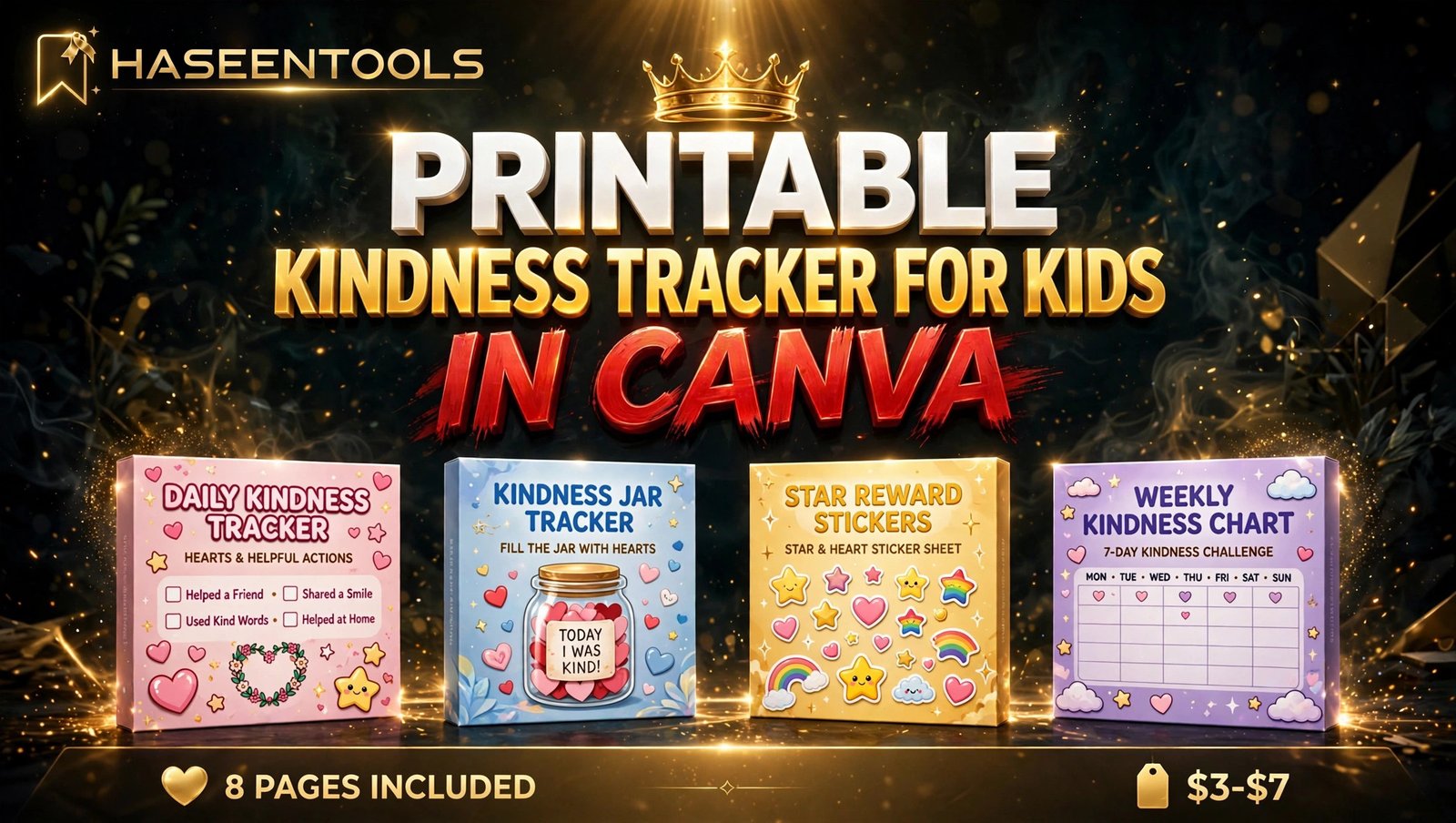
Your child held the door for a classmate yesterday — and nobody wrote it down. By dinner time, the moment was gone — and so was the chance to show your child kindness matters. A printable kindness tracker for kids to sell turns one good deed a day into a habit children can see growing on the wall. In this guide, you will build that tracker in Canva, price it at $3–$7, and list it — no design degree needed.
Parents already buy chore charts and reading logs. A kindness tracker teaches character, not just routine — and teachers buy it too. But it is not a reward chart with a new name: copy a chore chart, swap in the word “kind”, and buyers notice in seconds.
What Is a Printable Kindness Tracker for Kids?
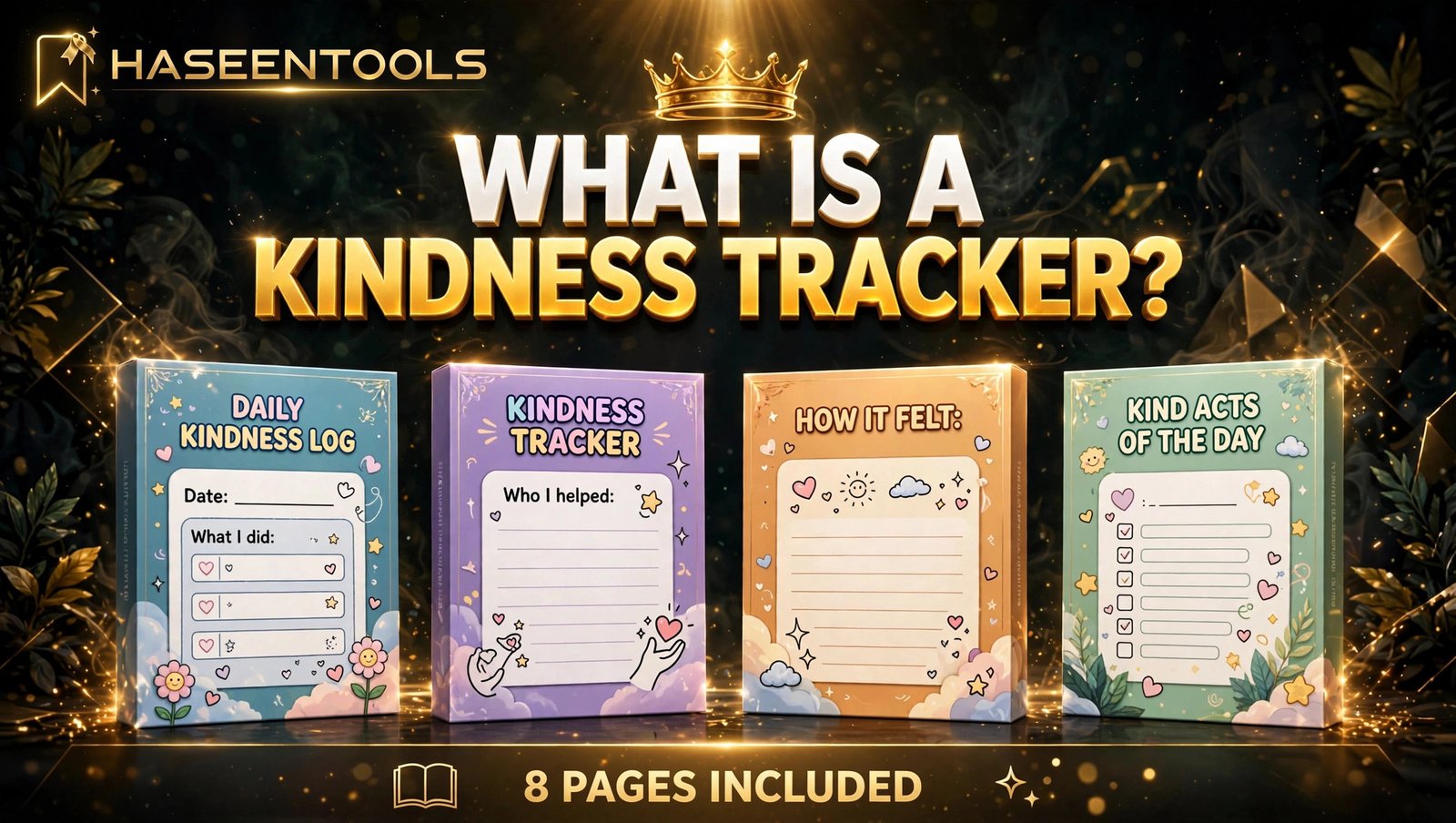
A printable kindness tracker for kids to sell is a one-page-a-day chart where a child records each kind act, who they helped, and how it felt. It usually runs for one week, with five kind acts as the goal, and it works as a printable PDF parents print at home.
Each day gets one row: the kind act, the person it helped, and a small face or word for how it felt. At the end of the week, the child counts the acts, colours a star, and picks a new goal.
Who buys it? Parents of children aged 4 to 10, who want a gentle tool for dinner-table conversations — “Who did you help today?” — instead of another screen. Teachers buy it too, for morning meetings and kindness weeks.
Why does it sell? A chore chart teaches routine; a kindness tracker teaches character.
Step 1: Pick Your Age Group and Plan Your 8 Pages
What to do: Choose one age group and map out all 8 pages before you open Canva — a tracker for a 4-year-old looks nothing like one for a 10-year-old.
Exactly how: Pick ages 4–7 or 8–10 — not both. Younger children get big boxes and picture prompts; older children get writing lines and a reflection prompt. Then list your 8 pages: cover, five daily logs, weekly goal page, reward stars page.
Example: For ages 4–7, the daily log has a heart to colour, a “Who I helped” line, and three faces to circle. For ages 8–10, it has “What I did”, “Who it helped”, and “How it felt” lines.
Pro Tip: Write the age range on the cover — “Ages 4–7” in bold. Parents scan fast, and a clear age range stops them scrolling past.
Step 2: Design the Daily Kind-Act Log Page in Canva
What to do: Build one daily log page a child can finish in two minutes — buyers judge the whole tracker by it.
Exactly how: Open Canva, set a custom size of 8.5 by 11 inches, and add a warm title at the top: “My Kind Acts Today”. Give each kind act one row with three columns — “What I did”, “Who I helped”, “How it felt” — about 1 inch tall. Use a soft cream background, one accent colour, and a simple font like Quicksand.
Example: A Monday page has five rows. Row one is a filled sample: “Shared my crayons — with Sara — felt proud.” The other four are blank, so the child sees exactly what to write.
Pro Tip: Leave the fifth row blank on purpose. Four filled rows feel like homework; five with one left over feel like a choice.
Step 3: Build the Weekly Goal and Feelings Pages
What to do: Add a weekly goal page and a feelings page, so the tracker teaches reflection, not just record-keeping.
Exactly how: On the goal page, put a big line at the top — “My goal this week: ___ kind acts” — with 5 as the suggested number — then three sentence starters: “This week I want to help…”, “I will be kind to…”, “Kindness feels like…”. On the feelings page, draw six simple faces for the child to circle each day: happy, proud, calm, shy, excited, surprised.
Example: A 7-year-old sets a goal of 5 kind acts. On Wednesday she helps a friend who fell over, circles “proud”, and writes “I will be kind to the new boy”. The parent sees the whole story in one glance — and leaves a five-star review.
Pro Tip: Print the number 5 on the goal page as a suggestion, not a blank — a ready-made goal feels doable; a blank one feels like another decision.
Step 4: Add the Kindness Jar and Reward Stars Pages
What to do: Finish the set with a kindness jar page and a reward stars page — the visual payoff that keeps children using it past week one.
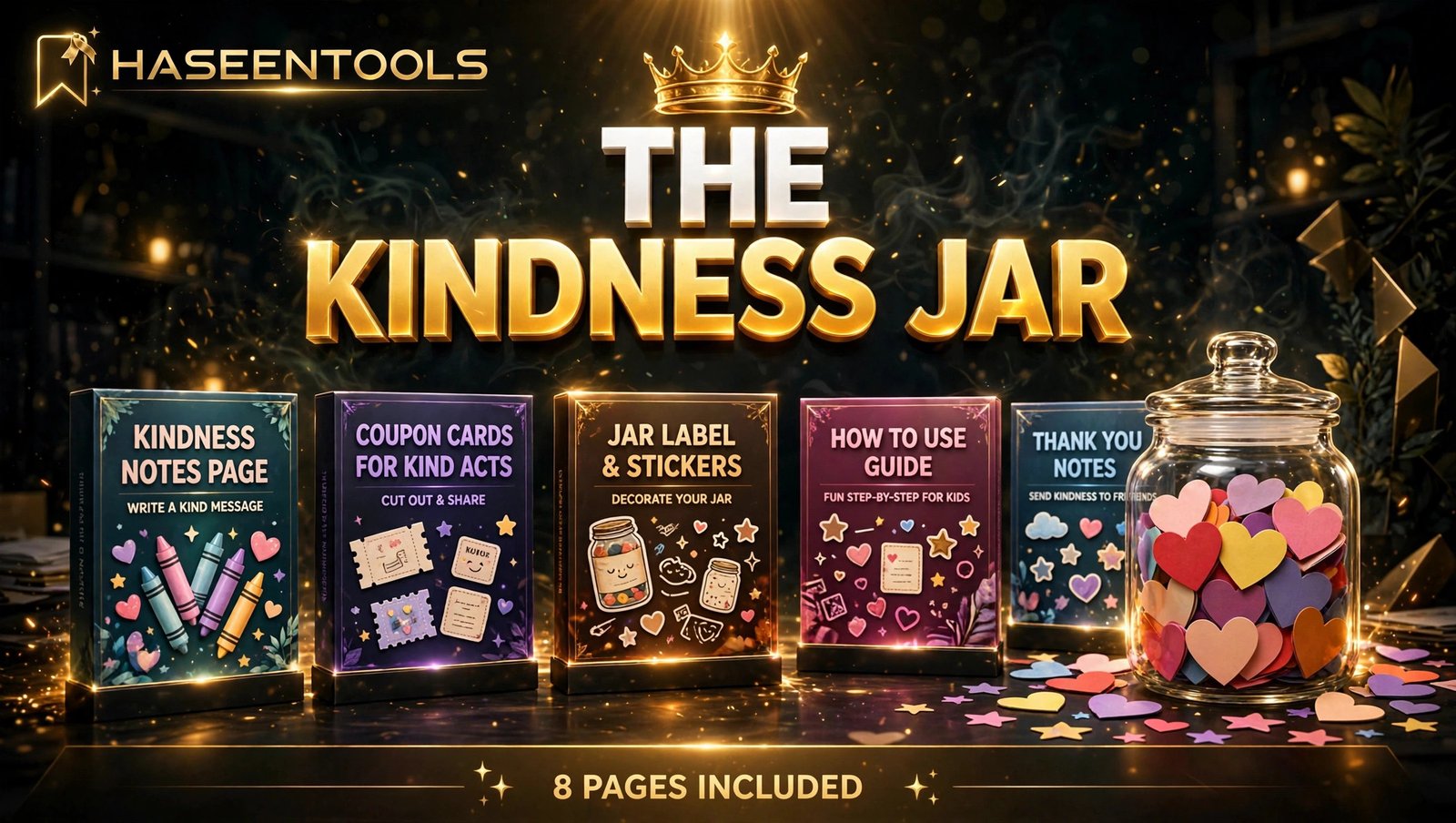
Exactly how: Draw a large empty jar with the words “One heart for every kind act” underneath; each kind act earns a coloured heart inside it. On the reward stars page, draw 10 star outlines in two rows of five: “Colour a star for every kind act — fill all 10 and celebrate!”
Example: After a week of 5 kind acts, the jar holds 5 hearts and the stars page shows 5 coloured stars. The parent picks a small, free celebration — a picnic, a bedtime story, or choosing Friday dinner — and the tracker becomes a family ritual.
Pro Tip: Never tie the stars to treats or money. Parents buy this tracker because they want kindness for its own sake.
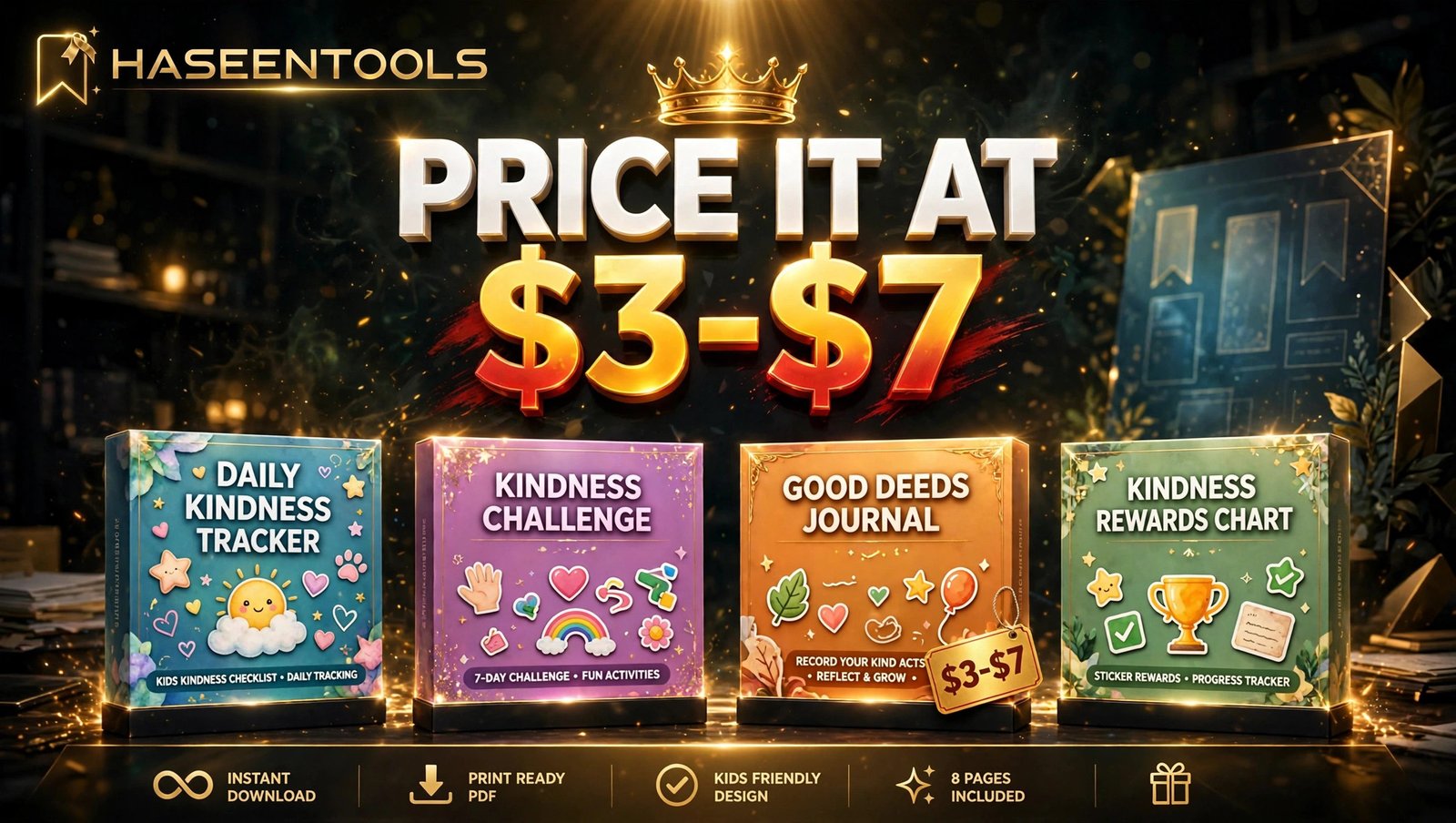
Step 5: Price It at $3–$7 and Set a Personal-Use Licence
What to do: Price the 8-page PDF at $3–$7 and state a clear personal-use licence. Pricing is where new sellers lose the most money, so keep it simple.
Exactly how: A printable kindness tracker for kids to sell works best at $5 — the middle of the $3–$7 range. If you list on Etsy, check the fees on a $5 sale first. Add one line to your listing: “Personal use only — print as many copies as you like for your own family or classroom.” Do not offer a commercial or resale licence; a simple licence keeps your listing honest.
Example: At $5, ten sales bring in $50 for one Canva file you built once. At $3, you would need seventeen sales for the same money.
Pro Tip: Sell it in a bundle later — kindness tracker plus gratitude tracker for $9 — instead of cutting the price. Bundles raise your average sale; discounts train buyers to wait.
Step 6: List It and Tell Buyers How to Use It
What to do: Write a listing that shows parents how the tracker works in real life — a listing that explains the routine sells far better than one that only lists page counts.
Exactly how: Upload your PDF as an instant download, and start the description with the routine, not the features: “Print the daily page, stick it on the fridge, and ask ‘Who did you help today?’ at dinner.” Add three listing photos — the cover, one daily log page, and the kindness jar page — plus a one-page “How to use” note inside the PDF, so buyers know what to do in 30 seconds.
Example: Your listing title reads “Printable Kindness Tracker for Kids — 8 Pages, Daily Kind Acts Log, Weekly Goal & Kindness Jar”. Your photos show the cover, a filled-in sample day, and the jar half full of hearts.
Pro Tip: Add “print at home” to your listing title or first line. It answers the most common buyer question before it is asked.
Kindness Tracker vs Other Kids’ Trackers
Here is how a kindness tracker compares with the closest products in this series.
| Product | What it tracks | Best buyer | Pages | Price |
|---|---|---|---|---|
| Printable kindness tracker | Kind acts and feelings | Parents of ages 4–10 | 8 | $3–$7 |
| Printable chore chart | Daily jobs and routines | Parents of ages 4–12 | 8 | $3–$7 |
| Printable gratitude tracker | Things to be thankful for | Parents of ages 4–10 | 8 | $3–$7 |
| Printable savings tracker | Money saved and goals | Parents of ages 6–12 | 8 | $3–$7 |
A kindness tracker is the only one of the four that tracks how a child treats other people, which is why it pairs so well with a gratitude tracker in a bundle: one looks outward, the other inward. If you already sell a printable chore chart for kids, it is the natural next product for the same buyers — and a printable savings tracker for kids teaches money habits the same gentle way.
Common Mistakes to Avoid
- Copying a chore chart and renaming it. A kindness tracker needs kind-act rows, a feelings page, and a jar — not job rows with a heart on top.
- Designing for every age at once. A tracker for ages 4 to 12 serves nobody well — pick one age group.
- Making the daily page too busy. More than five rows or tiny fonts turns a two-minute habit into homework.
- Promising results you cannot prove. Never claim it “makes children kinder” — say what it does: it records kind acts and starts conversations.
- Forgetting the “How to use” page. Without it, parents print the PDF and leave a confused review. One page of instructions saves ten support messages.
Quick Checklist
- Age group picked (4–7 or 8–10), written on the cover
- 8 pages planned: cover, 5 daily logs, weekly goal, reward stars
- Daily log has “What I did”, “Who I helped”, “How it felt”
- Weekly goal set at 5 kind acts, sentence starters included
- Kindness jar page and 10-star reward page added
- Price $3–$7 (start at $5), personal-use licence stated
- Listing photos: cover, sample day, jar page
- “How to use” note included inside the PDF
Frequently Asked Questions
What age is a kindness tracker for kids best for?
A kindness tracker works best for ages 4 to 10. Younger children use the picture prompts and colouring hearts; older children write short sentences about what they did and how it felt. Under 4 it is too early; over 10, a plain journal works better.
How many pages should a printable kindness tracker have?
Eight pages: a cover, five daily logs for Monday to Friday, one weekly goal page, and one reward stars page. Fewer than 8 feels thin for a paid printable; more than 10 feels like a workbook parents did not ask for.
Can I sell a kindness tracker made in Canva?
Yes. Build it with Canva’s free fonts and elements, export it as a PDF, and list it on Etsy or your own shop. Use only free elements — not Pro ones — unless you hold a Pro licence, and keep the licence personal-use.
How much should I charge for a printable kindness tracker?
Charge $3–$7, and start at $5. That matches what parents pay for a single printable, and leaves room to bundle it later. Under $3 looks thin; over $7 needs more pages or a bundle.
Conclusion
- An 8-page Canva PDF: five daily logs, a weekly goal page, and a reward stars page.
- Design for one age group (4–7 or 8–10), keep the daily page to two minutes, and set the weekly goal at 5 kind acts.
- Price it at $3–$7, start at $5, and keep the licence personal-use.
- Show it in use — a filled sample day and a half-full jar sell better than any feature list.
Kindness is the one value every parent wants to teach and almost nobody knows how to track. Build the tracker this weekend and list it on Monday. Then tell us in the comments: what was the kindest thing your child did this week?