

How to Create and Sell a Printable Mood Tracker in Canva: A Step-by-Step Guide

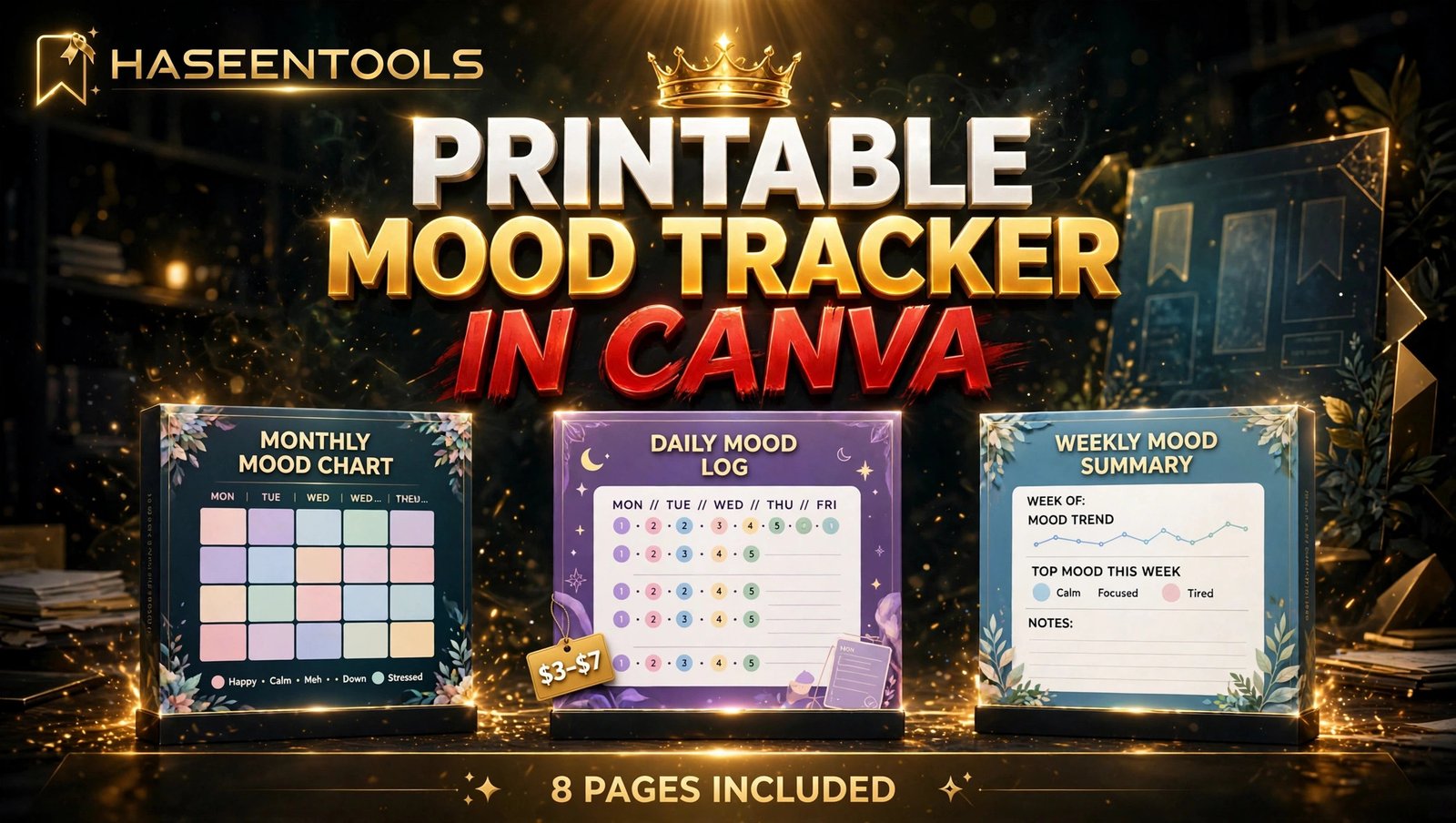
Some days feel bright for no clear reason. Other days feel heavy, and you cannot say why. A printable mood tracker turns that fog into a picture you can actually read — and buyers love that feeling. If you want a printable mood tracker to sell, you are in the right place. This guide walks you through all six steps, from the first page design to your first sale.
What Is a Printable Mood Tracker?
A printable mood tracker is a paper page where a buyer records how they feel each day, with a colour, a number or a short word. Most buyers print a fresh copy each month, colour in one box per day and watch patterns appear. It is a wellness tool, not a medical one: it records moods, never diagnoses anything, and never replaces professional help.
How do you create and sell a printable mood tracker in Canva? Pick one clear style, design an 8-page set in Canva on US Letter and A4 pages, test print every page, package the PDF with a personal-use licence, price it at $3–$7 and list it on Etsy or your own shop.
Step 1: Pick Your Mood Tracker Style
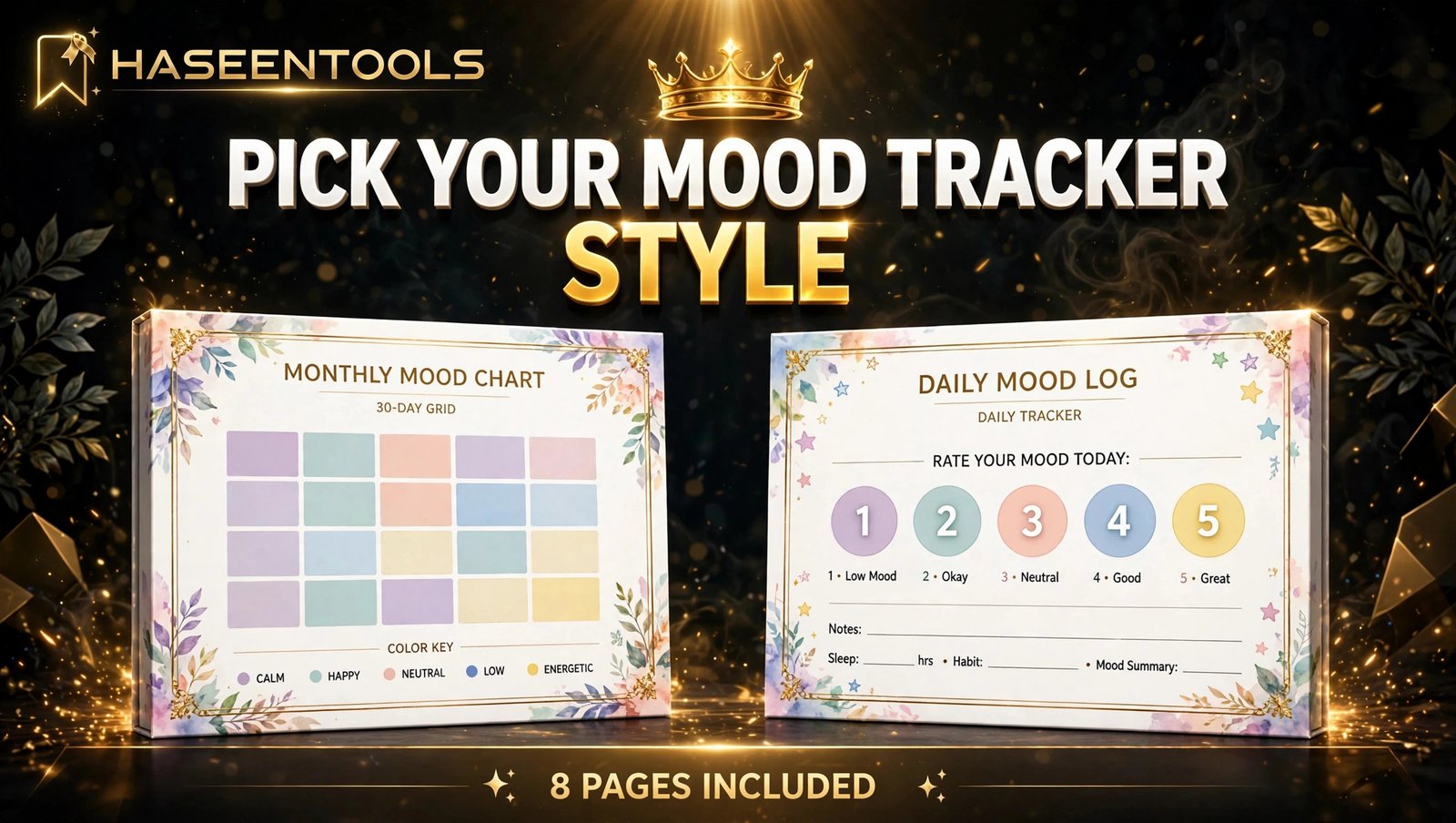
What to do: Choose one style before you open Canva. Three ideas on one page confuse buyers, and confused buyers do not buy.
Exactly how: Pick a mood scale first. A 1–5 scale works best: 1 is a hard day, 5 is a great day. Then pick a colour key with five soft colours, one per number, and print the key at the top of every page. Then choose your layout: a monthly grid of 30 or 31 boxes suits most buyers, while a daily log suits journaling fans.
Example: Maya sells a calm pastel tracker with a 1–5 scale and a 31-box grid. Her colour key runs from soft grey-blue for a 1 to warm gold for a 5, and her listing photos show the grid filled in, so shoppers understand the product in five seconds.
Pro Tip: Build your tracker around one buyer, not everyone. A clear buyer makes every later decision faster.
Step 2: Design the 8 Pages in Canva
What to do: Build an 8-page set that feels complete the moment a buyer opens it. Eight pages feels generous and still fits in a weekend.
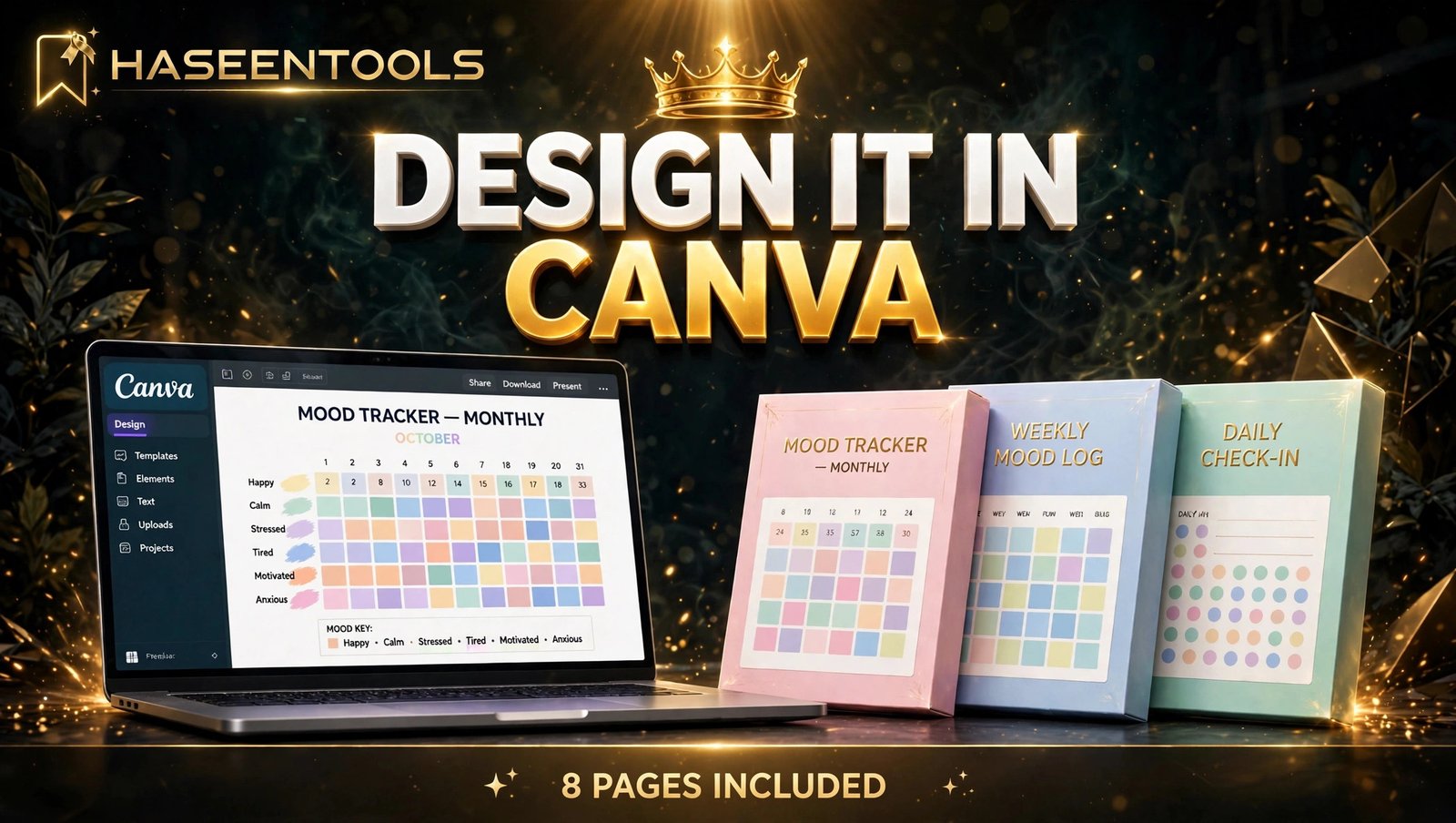
Exactly how: Open Canva, create a custom design at US Letter size (8.5 × 11 inches), and duplicate it into A4 as well. Design these eight pages: cover, daily mood log, weekly mood summary, monthly mood chart, mood triggers page, gratitude notes page, self-care checklist and instructions sheet. Use two fonts at most and keep the same colours on every page. Leave margins of at least half an inch so home printers never cut off a box. Leave month and year blank, never pre-filled, so buyers can reuse the file all year.
Example: A strong daily mood log has seven rows, one per day. Each row holds the date, a 1–5 number circle, a colour box and one line for a single word like “calm” or “tired”. The weekly summary asks three questions: “What lifted my mood?”, “What dragged it down?” and “One small thing I will try next week”.
Pro Tip: Design the monthly chart first. It is the page buyers photograph and pin, so your listing photos look good too.
Step 3: Test Print Every Page and Fix the Small Stuff
What to do: Print the whole set on a normal home printer before you list anything. A page that looks perfect on screen can print with cut-off boxes or unreadable text.
Exactly how: Export the set as a PDF and print one copy in black and white first, then one in colour. Check every page: boxes inside the margins, labels readable at arm’s length, colours clear in black and white. Many buyers print in greyscale, so your colour key needs numbers as well as colours. This round takes about 30 minutes and saves you from refund requests later.
Example: One seller found her monthly grid printed with the last column half cut off. The fix took two minutes — she shrank the grid by a quarter inch — but without the test print, every buyer would have hit the same fault. Another found her pale yellow “5” box printed almost white in greyscale, so she darkened it and added the number inside.
Pro Tip: Ask one friend to fill in a week by hand. If they hesitate anywhere, that spot needs clearer labels.
Step 4: Package the Files and Write the Licence
What to do: Turn your finished design into a tidy file buyers can use in under a minute. Messy files are the most common reason for bad reviews on simple printables.
Exactly how: Export two PDFs from Canva — one US Letter, one A4 — and put both in a single ZIP folder with a short instructions PDF and a licence text file. Name the files clearly, for example “Mood-Tracker-US-Letter.pdf” and “Mood-Tracker-A4.pdf”. Write the licence in plain words: personal use only, buyers may print as many copies as they like, and they may not resell, share or give away the files.
Example: A good instructions page says: “Print at 100% scale, choose US Letter or A4 to match your paper, and colour one box per day.” That answers the questions sellers get asked most.
Pro Tip: Include a one-page “start here” sheet in the ZIP. Buyers who feel guided in the first minute leave better reviews.
Step 5: Price It at $3–$7
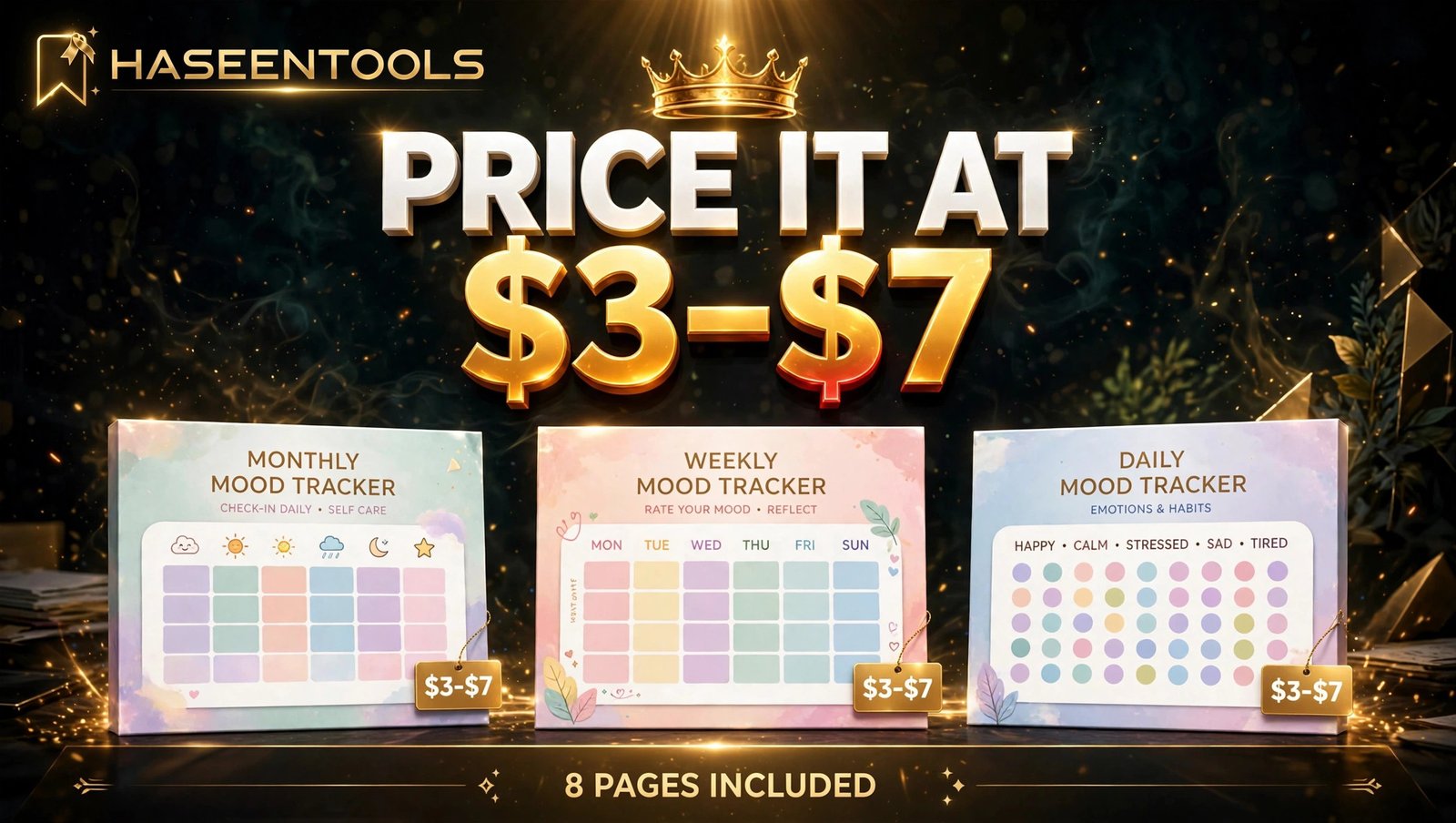
What to do: Price your printable mood tracker to sell between $3 and $7. That is what buyers already pay for small wellness printables, and it leaves room for a launch discount.
Exactly how: Start at $5 with all eight pages and clean mockups. New shops can open at $3 for two weeks to collect reviews, then raise the price to $5 once five reviews are in. Never price below $3: after marketplace fees, a $2 sale leaves almost nothing, and a very low price makes buyers suspect the quality. Check three similar listings first — if most 8-page trackers sit at $4–$6, your $5 fits the market.
Example: Sara listed her 8-page tracker at $5, sold three copies in the first week, and added a launch note: “Introductory price — rises to $6 after 10 sales.” With eight reviews in, she raised the price to $6 without losing sales.
Pro Tip: Price for the buyer you picked in Step 1. A student budget wants $3–$4; a busy professional happily pays $6–$7 for a calm, polished set.
Step 6: List It and Get the First Sales
What to do: List the tracker where buyers already search, with photos that show the product in use. A listing with no filled-in sample pages sells far slower than one with a finished month.
Exactly how: On Etsy, write a title that starts with the words buyers type: “Printable Mood Tracker, Daily Mood Log, Monthly Mood Chart, Wellness Journal Printable”. Use all 13 tags, including “mood tracker printable”, “daily mood tracker” and “wellness printable”. Upload five photos: the cover, a filled-in monthly chart, the daily log, the weekly summary and a flat-lay of all eight pages. In the description, say plainly what buyers get: 8 pages, US Letter + A4, PDF instant download, personal use only.
Example: One new seller made her first sale on day nine from a Pinterest pin of her filled-in monthly chart: mostly 3s and 4s, two 5s, one 2. That honest grid did more than any polished cover photo, because shoppers could picture their own month in it.
Pro Tip: Pin the filled-in monthly chart, not the cover. It sells the feeling, not just the file.
But here is the part most people miss: the tracker is only half the product. The other half is trust — when the listing, files and licence all look careful, one $5 sale becomes a review, and reviews become steady sales.
Mood Tracker vs Habit Tracker vs Journal: Which Sells Best?
| Product | Best buyer | Pages | Price | Hardest part |
|---|---|---|---|---|
| Printable mood tracker | Wellness and journaling fans | 8 | $3–$7 | Simple colour key |
| Digital habit tracker | Goal setters and planners | 10–12 | $5–$9 | Useful daily rows |
| Digital journal | Writers and self-care buyers | 20+ | $7–$15 | Many pages to fill |
A mood tracker is the easiest of the three to start with: fewer pages than a journal, less daily structure than a habit tracker, and buyers search with clear words like “mood tracker printable”. If you already sell habit trackers, a mood tracker is a natural next product, and a bundle of the two sells well at $9–$12.
Common Mistakes to Avoid
- Packing too many ideas on one page. A page with a mood grid, a water log, a sleep log and a gratitude box looks busy and prints badly. One idea per page.
- Pre-filling dates or years. A tracker dated 2026 stops selling in January. Blank month and year lines keep the file evergreen.
- Forgetting the black-and-white test. If the colour key only works in colour, greyscale buyers cannot use the product.
- Writing medical claims. Never say a tracker helps anxiety, depression or any condition. It records moods — that is all.
- Using tiny text. Anything below 11 points is hard to read on a home print.
Quick Checklist
- Style chosen: 1–5 scale, five-colour key, monthly grid plus daily log
- 8 pages designed: cover, daily log, weekly summary, monthly chart, triggers, gratitude, self-care, instructions
- US Letter and A4 versions exported as PDF
- Test printed in colour and greyscale
- ZIP with both PDFs, instructions and a personal-use licence
- Priced at $3–$7
- Listing live with five photos
- No medical claims anywhere in the listing or the files
Frequently Asked Questions
Can I sell a printable mood tracker I made in Canva’s free plan?
Yes. Canva’s free plan has everything you need: shapes, text, grids and free elements. Just check the licence on every element — free elements can go into printables you sell as finished PDFs, but do not sell Canva’s stock elements on their own.
What size should a printable mood tracker be?
Design in US Letter (8.5 × 11 inches) and A4. Those two sizes cover almost every home printer, and offering both stops the most common buyer question.
How many pages should a mood tracker have?
Eight pages is a good size for a first product: cover, daily log, weekly summary, monthly chart, triggers, gratitude, self-care and instructions. More pages suit a premium version later.
Where is the best place to sell a printable mood tracker?
Etsy is the easiest start because buyers already search there for “mood tracker printable”. Your own shop keeps more of each sale. Many sellers list on both and let the two channels feed each other.
Conclusion
A printable mood tracker is one of the simplest digital products you can make: buyers see their own days more clearly, and you get a product that takes a weekend to build and sells for years. Remember the four things that matter most:
- Pick one style — a 1–5 scale, a five-colour key and a monthly grid buyers understand in seconds.
- Design eight complete pages in Canva, in US Letter and A4, with blank dates.
- Test print everything in colour and black and white before you list it.
- Price it at $3–$7 and list it with a filled-in monthly chart photo that shows the product working.
Now open Canva, build your monthly chart first, and list your printable mood tracker to sell this weekend. Pair it with a printable sleep tracker or a printable self-care planner for a $9–$12 bundle, or browse the shop for more templates.